Restoring Your Lafayette Property After Water, Fire, Storm, or Mold Damage
A burst pipe, roof breach, kitchen fire, or sewage backup can turn a Lafayette property into an active safety and construction problem within hours. The right response is not simply removing visible debris; it is identifying concealed moisture, contaminated materials, smoke residue, structural instability, and indoor-air concerns before they become more expensive.
The term Restoration Services generally covers emergency mitigation, cleaning, remediation, repairs, and sometimes reconstruction after a damaging event. In practice, the work may involve water extraction, air movement, dehumidification, soot removal, antimicrobial cleaning, contents handling, and documentation for an insurance claim.
For local property owners, Restoration Logistics Lafayette can be evaluated alongside other contractors based on response availability, technical qualifications, scope clarity, and communication standards. Before authorizing work, understand what must happen immediately and what can wait for a carefully priced repair plan.
When Professional Restoration Is Needed
Restoration begins with mitigation: stopping active damage and stabilizing the building. Repairs and reconstruction come later. For example, extracting water and drying a room is mitigation; replacing damaged drywall, cabinets, flooring, or wiring is repair.
Common Lafayette-area triggers include:
- Burst supply lines, water heaters, appliance leaks, and plumbing failures.
- Heavy rain, wind damage, roof leaks, and storm-driven water intrusion.
- Fire, smoke, soot, and sprinkler discharge.
- Sewage backups and contaminated floodwater.
- Suspected mold caused by persistent humidity or undetected leaks.
Professional assessment is especially important because moisture can move behind walls, beneath flooring, into crawl spaces, insulation, and HVAC systems. Fire damage can similarly extend beyond burned areas through smoke migration and acidic soot deposits.
Leave or isolate the property when there is structural instability, active smoke, a gas odor, exposed electrical equipment, standing water near outlets or appliances, or sewage contamination. Do not enter a compromised structure until fire officials, utility personnel, or qualified professionals indicate it is safe.
Water and Flood Damage Restoration
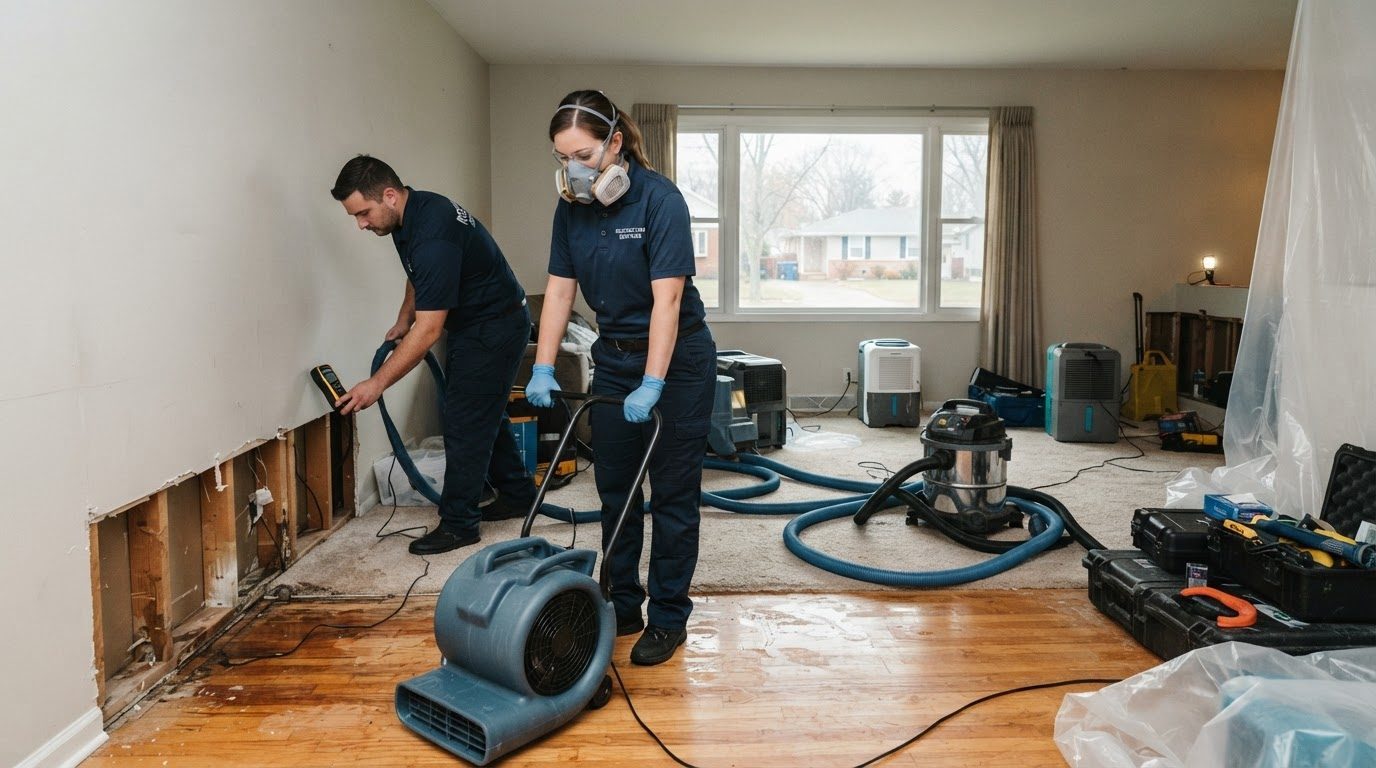
A typical water-loss workflow includes inspection, source control, extraction, moisture mapping, drying, cleaning, and repair planning. Technicians may use submersible pumps, truck-mounted extractors, moisture meters, thermal imaging cameras, air movers, and commercial dehumidifiers.
Standing water quickly affects:
- Drywall, baseboards, insulation, and cabinetry.
- Hardwood, laminate, carpet, and subfloor assemblies.
- Structural framing, crawl-space materials, and contents.
- Electrical systems and HVAC components.
Water categories matter. Category 1 water originates from a clean supply line. Category 2 contains significant contamination, such as discharge from a washing machine or dishwasher. Category 3 includes sewage and other heavily contaminated water; porous materials often require removal rather than routine cleaning.
Drying is not complete because a surface feels dry. Technicians should compare moisture readings with unaffected areas and check wall cavities, flooring edges, crawl spaces, cabinets, ductwork, and mechanical closets. In Lafayette’s humid, storm-prone climate, trapped moisture can remain active long after visible water disappears.
Homeowners should:
- Shut off the water source if it is safe to do so.
- Avoid electrical contact with wet areas.
- Photograph rooms, contents, and the source of damage.
- Move only lightweight items that can be handled safely.
- Avoid cutting walls, discarding materials, or using household fans before documentation and professional guidance.
Sewage cleanup requires containment, appropriate personal protective equipment, cleaning and disinfection, and disposal of regulated or contaminated materials. It should not be treated as ordinary mopping.
Fire, Smoke, and Odor Recovery
After firefighters leave, a property may need emergency board-up, roof tarping, water removal, soot cleaning, odor control, and structural evaluation. Smoke residue is acidic and can continue corroding metal, discoloring finishes, and damaging electronics even after the fire is extinguished.
Restoration may address:
- Walls, ceilings, trim, flooring, and insulation.
- Appliances, furnishings, textiles, and personal belongings.
- HVAC registers, ductwork, filters, and air-handling equipment.
- Smoke odor embedded in porous materials.
HVAC systems should not be operated automatically after a fire. Smoke particles can travel through return-air pathways and redistribute contamination. An inspection may determine whether duct cleaning, filter replacement, coil cleaning, or equipment replacement is appropriate.
Contents restoration can include inventory, pack-out, secure storage, ultrasonic cleaning, deodorization, and evaluation of salvageability. Ozone or hydroxyl treatment may be considered in controlled circumstances, but odor treatment cannot substitute for removing soot and correcting the source.
Simple cleaning is appropriate for limited surface contamination. Reconstruction is necessary when fire, heat, water, demolition, or smoke has compromised framing, wiring, roofing, drywall, flooring, or other building systems. Electrical and structural work should be performed by appropriately licensed trades.
Mold, Storm, and Biohazard Remediation
Mold remediation is a process, not a spray application. A sound protocol identifies and corrects the moisture source, establishes containment, controls dust and spores, removes affected materials, cleans remaining surfaces, dries the assembly, and verifies conditions when warranted.
Technicians may use negative-air machines with HEPA filtration, physical barriers, HEPA vacuums, moisture meters, and antimicrobial cleaning agents. Porous drywall, insulation, carpet pad, and heavily colonized wood may require removal. Older buildings also warrant caution around lead-based paint, asbestos-containing materials, and deteriorated insulation; disturbing those materials may require specialized professionals.
Storm response can include emergency tarping, board-up, fallen-debris removal, water extraction, temporary weatherproofing, and coordination of permanent roofing or exterior repairs. Temporary protection limits additional loss but is not a substitute for a documented repair scope.
Biohazard and sewage work requires controlled access, PPE, disinfection, odor management, and proper disposal. Environmental testing or third-party clearance may be useful when contamination is extensive, occupants have health concerns, a commercial property must document reopening conditions, or an insurer, regulator, or building manager requires it. Testing alone does not locate or fix a moisture problem.
From Emergency Response to Finished Repairs
A well-managed project usually follows this sequence:
- Initial call and safety screening: The contractor identifies hazards, the apparent source, occupancy conditions, and immediate actions.
- Inspection and documentation: Photographs, moisture readings, room measurements, affected-material inventories, and equipment logs establish the loss scope.
- Mitigation: Crews stop active intrusion, extract water, remove unsalvageable materials, clean contamination, or secure the structure.
- Drying or cleaning verification: Readings and visual inspections determine whether the affected assembly has stabilized.
- Repair planning: Estimates separate emergency services, demolition, contents handling, specialty work, and reconstruction.
- Reconstruction: Qualified trades restore drywall, flooring, cabinets, roofing, paint, electrical systems, and other components.
- Final walkthrough: The owner reviews completed work, remaining exclusions, warranty documents, and closeout records.
Industry standards from the Institute of Inspection Cleaning and Restoration Certification (IICRC), including S500 for water damage, S520 for mold, and S700 for fire and smoke restoration, can help define sound procedures. Ask whether the technicians are trained to applicable standards and whether the company carries required insurance and local or state licenses.
Costs vary widely. A minor water extraction and drying job may run roughly $1,000–$3,500; larger losses involving demolition, sewage, or multiple rooms can exceed $5,000–$15,000. Fire cleanup may range from several thousand dollars for localized damage to tens of thousands for structural reconstruction. Mold projects commonly cost $1,500–$6,000, while extensive containment or demolition costs more. These are planning ranges, not quotes; access, materials, contamination, urgency, and reconstruction requirements determine the final price.
Ask before work begins:
- Is emergency response available after hours, and what is the expected arrival window?
- What exact services are included in the initial scope?
- Which materials will be removed, and why?
- What equipment, moisture readings, and drying targets will be documented?
- Are subcontractors, environmental consultants, plumbers, electricians, or roofers involved?
- How are daily updates, photographs, inventories, and change orders handled?
- What certifications, licenses, insurance, warranties, and guarantees apply?
- What costs are due immediately, and which items depend on insurance approval?
A restoration contractor can document damage, prepare estimates, and communicate technical information to an adjuster. However, the policyholder remains responsible for reporting the claim, reviewing coverage, and approving payments; only the insurance carrier determines coverage. Clear records and a written scope help everyone distinguish necessary mitigation from elective upgrades and permanent repairs.
