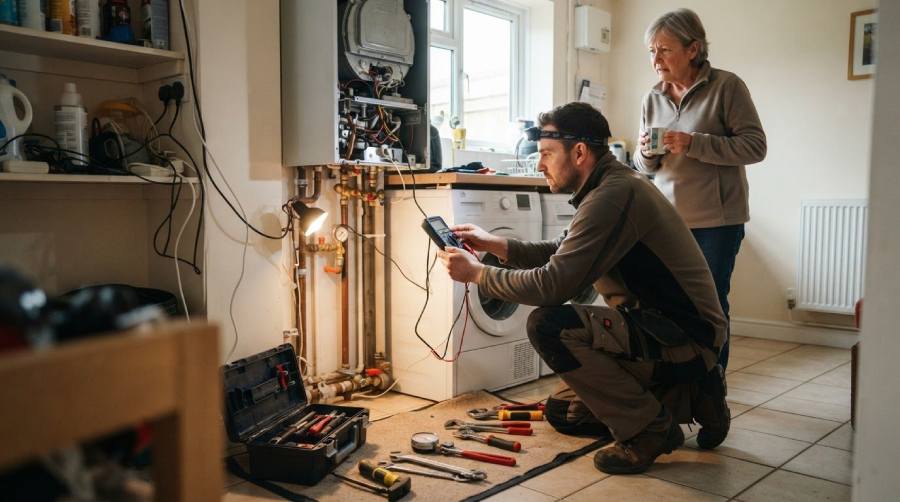
Fast, Safe Help When Plumbing or Heating Fails
A burst pipe, sewage backup or boiler failure can turn from a minor fault into a serious property emergency within minutes. Water can damage flooring, plaster, electrics and possessions, while loss of heating in a Bedfordshire cold spell can create health risks for older people, children and vulnerable occupants.
Reliable information matters when decisions must be made quickly. TPA Emergency Repairs is associated with emergency plumbing and heating searches across Bedfordshire and nearby areas, but customers should still focus first on immediate safety, isolation procedures and the qualifications required for the work.
The right response is not always a full repair on the first visit. An engineer may initially stop the leak, isolate unsafe equipment, protect the building and identify the parts or specialist work needed for a permanent solution.
When an Issue Needs Immediate Attention
An emergency repair is generally one involving an immediate risk to:
- Health, such as sewage contamination or a lack of essential heating.
- Safety, including suspected gas leaks, exposed electrical hazards or uncontrolled flooding.
- Property, where water is rapidly damaging ceilings, walls, floors or contents.
- Essential services, such as the only usable toilet, shower or heating system.
Typical emergencies include burst pipes, leaking storage tanks, overflowing toilets, sewage discharge, major central-heating leaks and complete heating failure during freezing weather. A failed shower may also be urgent where it is the only bathing facility, particularly in a property occupied by someone with mobility or care needs.
By contrast, a minor tap drip, noisy radiator, cosmetic pipe corrosion or intermittent appliance fault can usually be booked as a routine appointment, provided the problem is not worsening or creating a safety risk.
What to do first
- Turn off the internal stopcock or appliance isolation valve if you can do so safely.
- Switch off electricity at the consumer unit only if water has not reached electrical equipment and it is safe to approach.
- Turn off the boiler or heating controls if the system is leaking or behaving abnormally.
- Move furniture and belongings away from the affected area, without entering unsafe water.
- Avoid dismantling boilers, gas appliances, pressurised cylinders or electrical equipment.
- Photograph the damage for the landlord, insurer or property manager.
In Bedfordshire, freezing conditions can affect external pipework and condensate drains, while older housing stock may contain ageing tanks, valves and mixed pipe materials. These factors can influence both the urgency and the repair method.
Plumbing Emergencies Covered Across Bedfordshire and Nearby Areas
Emergency plumbing work may be needed in houses, flats, rental properties, shops, offices, warehouses and other commercial premises. Common categories include:
- Burst pipes and leaking tanks: The priority is to stop incoming water and reduce pressure before replacing damaged sections, valves or tank fittings.
- Blocked or overflowing toilets: Repeated plunging can worsen an obstruction. Overflowing wastewater should be treated as contaminated, with children and pets kept away.
- Failed showers and taps: A seized cartridge, fractured connection or failed flexible hose can cause significant leakage, even when the visible fixture appears intact.
- Leaking radiators and heating pipework: Corroded radiator valves, compression joints and hidden pipes can release enough water to damage flooring and ceilings.
- Water-damaged fixtures and pipework: Saturated boxing, cabinets and plaster may conceal continuing leaks, requiring moisture checks after isolation.
The first objective is containment: close the appropriate valve, cap or isolate the affected branch, and prevent further spread. Diagnosis then involves visual inspection, pressure checks, tracing the source of water, and assessing whether concealed pipework or structural materials have been affected.
In flats, access to a communal riser, stop valve or neighbouring property may be necessary. Leaseholders and tenants should notify the managing agent or landlord promptly, particularly where a leak crosses floors or affects shared services. Commercial premises may also need documented isolation procedures to protect stock, equipment and business-critical areas.
Gas, Boiler and Central-Heating Safety
A boiler fault is not automatically a gas emergency. A heating system may lose pressure because of a small water leak, expansion-vessel problem or pressure-relief discharge. A suspected gas leak is a separate and potentially life-threatening situation.
If you smell gas or suspect a gas escape:
- Do not light flames, smoke or operate electrical switches.
- If safe, open doors and windows for ventilation, but do not delay leaving the property.
- Leave the building and keep others away.
- Call the National Gas Emergency Service on 0800 111 999.
- Do not return until it is declared safe.
Only an engineer with the appropriate Gas Safe registration and competence for the appliance and work involved should inspect or repair gas appliances. Do not use a boiler, fire or cooker that has been identified as unsafe.
Common heating emergencies include boiler breakdowns, pressure loss, radiator leaks, frozen condensate pipes and a complete loss of heating or hot water. A frozen condensate pipe may sometimes be thawed using warm—not boiling—water, following the appliance manufacturer’s guidance. If the fault persists, professional assessment is required.
An engineer may check fault codes, system pressure, pump operation, circulation, flue arrangements, condensate routing, safety controls and combustion performance. Repairability depends on diagnosis, compatible parts, appliance age and the engineer’s qualifications. A same-visit replacement cannot be guaranteed, particularly where a heat exchanger, control board or specialist component is required.
What Happens During an Emergency Repair Call
Clear information helps the responding engineer prepare and reduces avoidable delays. Provide:
- The exact property address, floor or unit number, and access instructions.
- The location and nature of the fault.
- Whether water, gas, electricity, heating or hot water is affected.
- Whether the leak is active, worsening or reaching electrical equipment.
- The steps already taken, such as closing a valve or evacuating the property.
- Details of vulnerable occupants, pets, tenants or restricted access.
A practical emergency response usually follows this sequence:
- Hazard assessment: The engineer identifies immediate risks from water, gas, electricity, contamination or structural damage.
- Isolation: Supplies, valves or appliances are shut down where appropriate.
- Containment: Leaks are capped, temporary repairs installed, and affected areas made safer.
- Diagnosis: The cause is established using inspection, pressure testing, electrical checks or boiler diagnostics.
- Permanent repair: Damaged components are replaced or a follow-up appointment is arranged.
Access is especially important in flats, gated developments and managed commercial buildings. Someone should be available to let the engineer in, and keys or access codes should be confirmed in advance.
The first visit may make the property safe without completing every element of the repair. Specialist parts, drying work, replacement cylinders or follow-up electrical and building work can change the timescale. Ask for a written explanation of what has been isolated, what remains outstanding and whether the system can safely be used.
Emergency Repair Questions Homeowners Commonly Ask
How long does an emergency repair take?
Arrival time depends on severity, location, traffic, engineer availability and whether the incident involves gas or a wider public emergency. The repair itself may take less than an hour for a failed valve, but concealed leaks, flooding, boiler diagnostics and parts sourcing can require considerably longer.
There is an important difference between making a property safe and fully completing the repair. Temporary isolation may be completed promptly while permanent pipe replacement, drying, plasterwork or appliance repair follows later.
What is classed as an emergency repair?
Usually, it is an active or rapidly worsening problem that risks health, safety, serious property damage or loss of an essential service. Examples include:
- An uncontrollable water leak or burst pipe.
- Sewage overflow or wastewater entering living areas.
- Flooding near electrical installations.
- Loss of essential heating during cold weather.
- A suspected gas escape.
- Failure of the only usable toilet or washing facility.
Minor drips, cosmetic damage and non-urgent appliance issues generally fit standard appointments, unless circumstances make them hazardous or likely to deteriorate quickly.
What should I do if I cannot find the stopcock?
Check beneath the kitchen sink, near the point where the mains supply enters the property, beside a utility room, or close to the kitchen entrance. Flats may have an internal valve plus a communal or external stop valve.
Once located, turn the handle clockwise gently. Do not force a seized valve, as it may break and create a larger leak. If you cannot isolate the supply, contact the water supplier, landlord or an emergency plumber and keep clear of the affected area.
Can a boiler or gas appliance be repaired immediately?
Sometimes, but no responsible engineer should promise this before diagnosis. The outcome depends on:
- The fault and results of safety testing.
- Availability of compliant replacement parts.
- The appliance’s age and condition.
- The engineer’s Gas Safe competence.
- Whether the flue, ventilation or wider heating system is involved.
Never repeatedly reset an appliance that locks out, smells unusual or shows signs of overheating. Leave unsafe equipment switched off until it has been inspected, tested and confirmed safe for use.
