The Handover Point: How a Rubber Hose Manufacturer Decides a Stainless Steel Hose Is the Better Fit
A good rubber hose manufacturer will sometimes tell you something that sounds odd at first: rubber is not always the right answer. Some lines carry steam, acid or hot condensate every single day, and rubber struggles with that kind of work over time. That is usually the moment a stainless steel hose starts to make more sense. So how does a supplier who makes both types decide where one ends and the other begins? The answer depends far less on price than on what actually flows through the line.
JRE Private Limited makes utility and specialised rubber hoses alongside stainless steel corrugated hoses built to BS 6501. That mix matters more than it seems. A rubber hose manufacturer with a single product type may push that product onto every job. A supplier with a stainless steel hose range has less reason to stretch rubber past its limits.
Why Rubber Hoses Reach Their Limit in Hot and Corrosive Lines
Here is why the question comes up at all.
Rubber bends easily, costs less and suits plenty of water, air and general transfer work. Heat and harsh chemicals change the picture. Over months, perhaps sooner, rubber can harden, crack or swell when it meets the wrong media.
Think about what a burst hose on a steam header would mean for your shift. Would your team spot the early signs, or would they find out when the hose splits?
Stainless Steel Hose Applications That Point Towards Metal
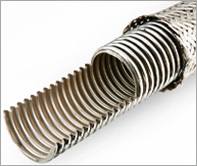
Let’s break it down. JRE’s product page lists the media where its stainless steel hoses take over from rubber and plastic:
- Steam, hot water and condensate
- Gas, ammonia and mercury
- Nitric, sulphuric, tannic and other acids
- Oils, petrol and LPG in refineries
- Air and oxygen supply for blast furnaces in steel plants
- Cooling lines in power plants and reactor installations
The same page names corrosion and vacuum as the two problems where metal makes the most sense. If your line faces either one, rubber is probably the wrong place to start.
Stainless Steel Hose Specifications to Check Before You Switch
Numbers help settle the debate. JRE lists sizes from 6 mm up to 350 mm and temperatures up to 800°C. Core options include 304, 321, 316 and 316L stainless steel, plus Monel and bronze, with SS 304 or SS 321 braiding.
Pressure ratings depend on diameter, temperature, braid count and material, so the figure changes from one assembly to the next. Ask for the technical data for your exact size rather than trusting a single headline number.
End fittings deserve a look too. TIG welded, mechanical, soldered and silver brazed options each suit different installations.
In Closing
The honest answer may well be a bit of both, with rubber on the easy runs and metal where the heat and chemicals sit. The handover point is rarely one fixed rule. It comes from matching each hose to its media, and a supplier who makes both can show you where that point falls in your own plant.
