What a Blood Collection Chair and a Physio Table Have in Common, and Where They Differ
A clinic that runs lab collection and physiotherapy under one roof often buys all its furniture at the same time. The blood collection chair and the physio table end up on the same purchase order, from the same supplier, and may even be placed in the same room. On paper, they look like two very different products. One seats a patient upright for a relatively short procedure, while the other supports the body through a longer treatment session. Look a little closer, though, and the two share more than most buyers expect.
That overlap helps when you compare quotes. Once you know which features a blood collection chair and a physio table share, you can check both against the same list of questions. You also see which features only one of them needs, so you don’t pay for extras that go unused.
Where a Phlebotomy Chair and a Physiotherapy Table Overlap
Both are designed to support a patient’s weight during a procedure or treatment session, and staff clean both regularly throughout the day. So the same three checks apply to each.
● Frame strength. Esthetica builds its phlebotomy chair from heavy-duty mild steel sheet metal and tube, with a stated load capacity of 180 kg. The Parth Physiotherapy Table uses a precision-welded steel frame with a semi-gloss powder coat.
● Upholstery that handles cleaning. The phlebotomy chair has easy-to-clean, phthalate-free upholstery on a padded seat and backrest, while the Parth table’s upholstery is specified as resistant to UV exposure, fire and abrasion.
● A written load rating. Ask for a stated figure for each item. Parth lists a 150 kg distributed patient load and a 200 kg safe working load.
Comfort belongs in this shared column too. A nervous donor and a rehab patient with a stiff back are both likely to appreciate padding designed to provide support during their time on the furniture. Is that a spec? Not exactly, but it still shapes how the visit feels.
What Sets a Phlebotomy Chair Apart
Here is why the chair looks the way it does. A blood draw centres on the arm, so most adjustments are built around it. Esthetica’s phlebotomy chair has a height-adjustable blood drawing arm, an adjustable elbow rest, and a padded flip armrest that adjusts for height and depth. The armrest swings away to make it easier for the patient to get up and leave.
Size matters here as well. The chair measures 71 cm long and 76 cm wide, with a 55 cm sitting height. In a small collection room, these dimensions can help when planning space for additional furniture.
What Makes a Physiotherapy Table Different
A physiotherapist works around the patient, so the physio table needs to suit both the therapist’s working height and the treatment requirements. The Parth table has four sections, with gas springs on the backrest and headrest. Its armrests lower to allow different positioning options when the patient lies face down.
On the Pro model, a hands-free foot control adjusts the height from either side of the table. The same model has four swivel wheels and a system that lifts the table onto them and locks it back in place. A clinic that treats one patient per room may not need wheels at all. A shared therapy hall perhaps would.
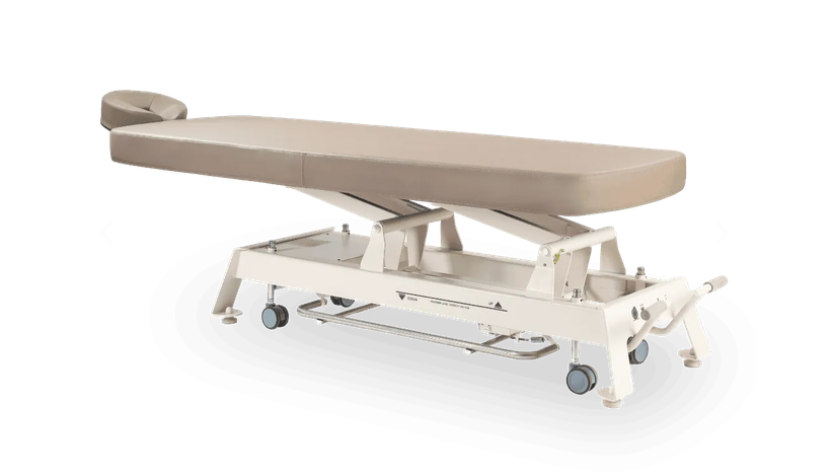
For flat-top work, the Ojas table comes with electric height adjustment and a detachable face cradle for patients lying face down.
Next Steps for Your Clinic Furniture Plan
Write down your rooms, services, and daily patient count. Then check each quote against the shared features and the separate ones above. The Esthetica team can help you pair a phlebotomy chair with a treatment table that fits your clinic layout.
