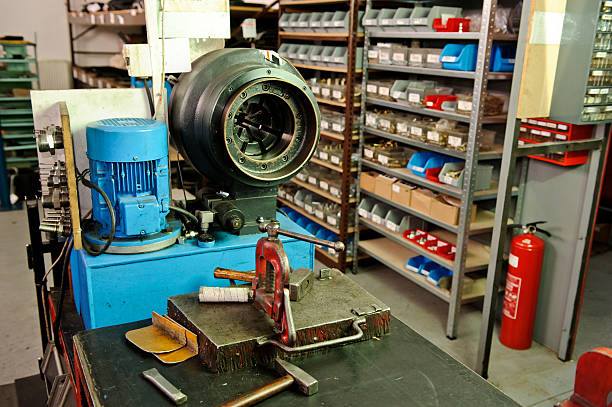
How a Finn Power India Crimping Machine Improves Hose Assembly Accuracy
A hose assembly is only as reliable as its weakest joint. When a fitting fails under pressure, the cost is rarely just the part. Production stops, safety drops, and warranty claims start arriving. This is where the crimping machine earns its place on your shop floor.
A Finn Power India crimping machine has built a name for tight tolerance work across hydraulic and industrial hose lines. The accuracy it brings to a crimp is not a small detail. It decides whether the assembly holds for years or gives way in months.
Why Crimp Accuracy Matters
A crimp diameter that drifts by even 0.1 mm can change how the ferrule grips the hose. Too loose, and the fitting leaks under pulsing pressure. Too tight, and the inner tube gets damaged, weakening the assembly from the inside.
Here is why this counts in real terms. Hydraulic systems often run above 350 bar. A poorly crimped fitting at that pressure turns into a safety hazard. Workers, surrounding equipment, and the operator all face risk.
Most failures, perhaps surprisingly, trace back to inconsistent crimping rather than bad hose stock. Operators sometimes blame the rubber. The real culprit is often the machine.
What Finn Power India Machines Bring to the Process
The build of a crimping machine decides how repeatable its output is. Finn Power India units stand out for a few practical strengths that show up batch after batch.
- Calibrated force control that holds each crimp within tight diameter limits
- Hardened die sets that resist wear across thousands of cycles
- Digital readouts so the operator can verify the crimp on the spot
- Quick die change systems that reduce setup error between hose sizes
A workshop running mixed hose sizes gets the most out of this. Switching from a 1/4 inch line to a 1 inch line can introduce variance if dies and pressure settings drift. Good machines hold settings. Better ones flag deviation before a bad crimp leaves the bench.
There is also the question of operator skill. Even a careful technician makes mistakes on a long shift. A machine that locks in its parameters takes some of that risk off the table.
The Hidden Cost of Poor Accuracy
Think about what one failed hose really costs. The replacement part is a small number. The bigger figure covers machine downtime, lost production, rework, and sometimes a damaged customer relationship.
Industry data covered by the Hydraulics & Pneumatics journal shows that hose failures account for a measurable share of unplanned downtime in heavy equipment operations. Many of those failures begin at the crimped end, not in the middle of the hose. The fitting is where pressure concentrates, and that is where weak crimping shows up first.
A crimping machine that holds its tolerances pays for itself in fewer warranty returns and tighter quality records. That kind of reliability matters when an audit lands on your workshop floor.
Final Thoughts
A machine alone cannot replace solid procedure. But a well-chosen unit makes good procedure easier to follow, and that is where accuracy compounds over time.
The quality of every hose assembly that leaves your workshop traces back to the crimp. Choose the machine that respects that fact.
Featured Image Source: https://media.istockphoto.com/id/183426665/photo/hose-crimping-machine.jpg?b=1&s=612×612&w=0&k=20&c=EHHKgTRyGB2wxdcroB2CVTSNiEK7ttBYgGtuVGAvpWs=
