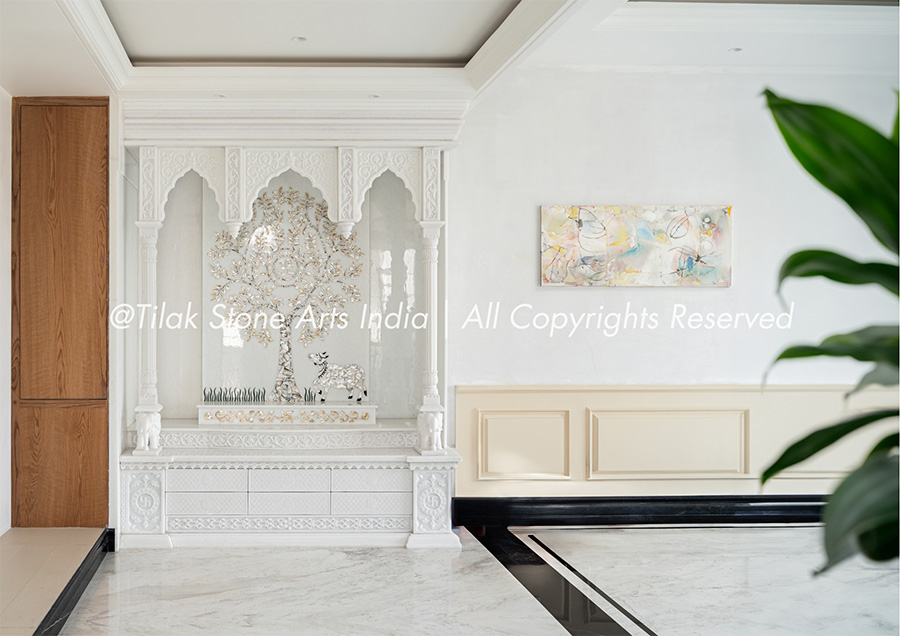
How a Minimal Design Can Make a Spiritual Space Feel More Meaningful
Light-coloured stone enhances the meditative atmosphere while ensuring lasting beauty.
The modern home is shifting towards simplicity. People want spaces that breathe, that allow thoughts to settle without visual noise pulling attention in multiple directions. This principle applies powerfully to spiritual spaces. A cluttered temple corner fights for attention rather than inviting quiet reflection. The design of a prayer area shapes how deeply someone can connect with their practice.
The Power of Simplicity in Sacred Spaces
Creating Visual Calm: A white marble temple offers a serene foundation that doesn’t compete with the sacred Dietes it houses. The clean surface reflects light softly, creating an atmosphere of purity that supports meditation. When the eye has fewer elements to process, the mind finds it easier to focus on prayer. Stone with minimal veining or patterns provides this clarity naturally.
Balanced Proportions Matter: The structure of a simple marble mandir design follows principles that have guided temple architecture for centuries. Symmetry creates a sense of order that the human brain finds inherently peaceful. When proportions follow traditional ratios, even without elaborate decoration, the space feels harmonious. The eye travels smoothly across surfaces, finding rest rather than restlessness.
Material Choice Shapes Spiritual Experience
Light Stone Creates Openness: Vastu Shastra principles have long favoured the use of lighter materials in sacred spaces for good reason. White and cream-toned stone brings an expansive quality to even compact temple areas. The material choice affects not just appearance but the actual feeling of being in the space. Natural stone with subtle variations feels alive without being distracting.
Durability Supports Daily Practice: A prayer space needs to withstand daily use without showing wear. Quality stone maintains its appearance through years of oil lamps, incense, and regular cleaning. Families want temples that look as dignified five years from now as they do on installation day. The right material choice means less worry about maintenance and more focus on devotion.
Design Elements That Enhance Meaning
Key Features of Minimal Temple Design:
- Clean architectural lines that guide attention to the deity rather than decorative elements
- Strategic carved details at focal points like pillars or door frames
- Smooth surfaces that reflect light evenly throughout the prayer space
- Proportional balance that creates visual harmony without complexity
Subtle Details Add Depth: A simple lotus motif on a pillar or delicate jali work on a back panel provides visual interest without creating chaos. These touches honour tradition in a restrained way. The architecture itself becomes a tool for focusing awareness when every element serves a clear purpose.
Practical Benefits of Minimalist Temple Design
Easier Maintenance Means More Time for Practice: Simple surfaces clean quickly and thoroughly. There are fewer crevices for dust to accumulate, fewer decorative elements requiring careful attention during daily upkeep. This practical advantage matters significantly for busy households where prayer time is precious and limited. A streamlined design respects both spiritual needs and modern lifestyles.
Adaptable to Different Home Styles: A minimal temple design fits comfortably in contemporary homes, traditional settings, or anything between. The simplicity allows it to complement rather than clash with surrounding décor. This flexibility matters as families move or renovate over time. The temple remains appropriate regardless of changing interior trends.
Light and Material Working Together
Reflection Creates Atmosphere: Light-coloured stone interacts beautifully with both natural daylight and lamp light during evening prayers. The subtle glow that results enhances the meditative quality of the space. Morning prayers feel fresh and energising, evening rituals become more intimate and contemplative. The material itself participates in creating the spiritual experience through its interaction with light.
Temperature and Texture: Natural stone provides a coolness that feels appropriate for sacred spaces in warm climates. The smooth texture under the hand during prostration or lighting lamps connects the worshipper physically to the practice. These sensory elements, though subtle, contribute to the overall experience of devotion in ways that ornate designs sometimes overshadow.
Conclusion
A minimal design in spiritual spaces isn’t about doing less but about doing what matters most. Clean surfaces, balanced proportions, and quality materials create environments where prayer deepens naturally. Light-coloured stone brings both beauty and practicality to daily worship. Consider how intentional simplicity might transform your own prayer space into a true sanctuary for spiritual growth.
Featured Image Source: https://drive.google.com/file/d/1apKvHbHt0vdgRKomYCG6tHeq1aVeqc1E/view?usp=drive_link
