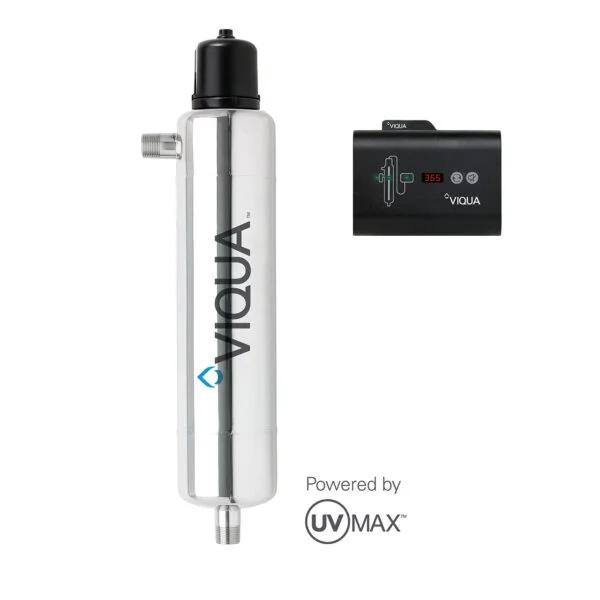
Why UV Light Belongs in Your Home Water Treatment System
Most rural homeowners spend time thinking about water pressure. Not many spend time thinking about what is actually in the water coming out of the tap. That is perhaps the bigger problem. Well water does not go through a municipal home water treatment system. There is no chlorination stage, no government-run filtration process sitting between your aquifer and your glass. What comes up out of the ground is what you get. And what comes up out of the ground can have bacteria, viruses, and other things in it that you wouldn’t want anywhere near your family. Here is why what we are about to discuss is more important than most people realize.
What UV Light Water Treatment Actually Does
UV light water treatment is a system in which water is exposed to a specific wavelength of light, 254 nanometers. At 254 nanometers, the light interferes with the DNA of microorganisms as they pass through the light chamber. They are rendered unable to reproduce. They can’t make you sick unless they can reproduce.
The process adds nothing to the water. No chemicals. No taste changes. No byproducts. The water flows in, through the UV light, and then out the other side. And that is why UV has become such a popular stage in home water treatment systems in rural Canada.
Where It Fits in a Home Water Treatment System
UV disinfection does one thing well. It handles biological contamination. It does not remove sediment, iron, hardness, or chemical compounds. That is why it rarely works as a standalone solution in a complete home water treatment system.
Here is how it typically fits:
- Sediment filter first, to remove particles that could block UV light from reaching microorganisms
- Water softener or iron filter next, if hardness or iron is present
- UV system after, once the water is clear enough for the light to do its job
- Carbon filter last, optional, for taste and odour
The order matters. Turbid or discoloured water absorbs UV light before it reaches the microorganisms. A UV system installed without pre-filtration may give you a false sense of security.
The Risk of Skipping It
Coliform bacteria, E. coli, and Giardia have all been detected in private well water across Ontario. The Ontario Ministry of the Environment recommends that well owners test their water at least three times per year. Many do not test at all.
Perhaps that is understandable. If the water looks clear and smells fine, it feels safe. The problem is that most biological contaminants are invisible. You will not see them, smell them, or taste them until someone in the house gets sick.
A UV system running in your home water treatment system gives you a layer of protection that works every time water passes through, not just when you remember to add something or change a filter on a schedule.
A Practical Addition
UV systems are not difficult to maintain. The lamp needs replacing roughly once a year, and most units have an indicator light that tells you when output drops. That is about the extent of ongoing upkeep.
For families on well water, the question is not really whether UV light water treatment is worth it. The question is, why wait until there is a problem to find out you needed it?
Featured Image Source: https://www.thewaterguysnorth.com/wp-content/uploads/2025/03/Viqua_D4_with_Controller_Top_Seller_No_Banner__96014.1497671286.1280.1280-1-600×600.jpg
